


Research
Members of our division pursue independent research themes based on their individual backgrounds and expertise. Representative projects are introduced below.
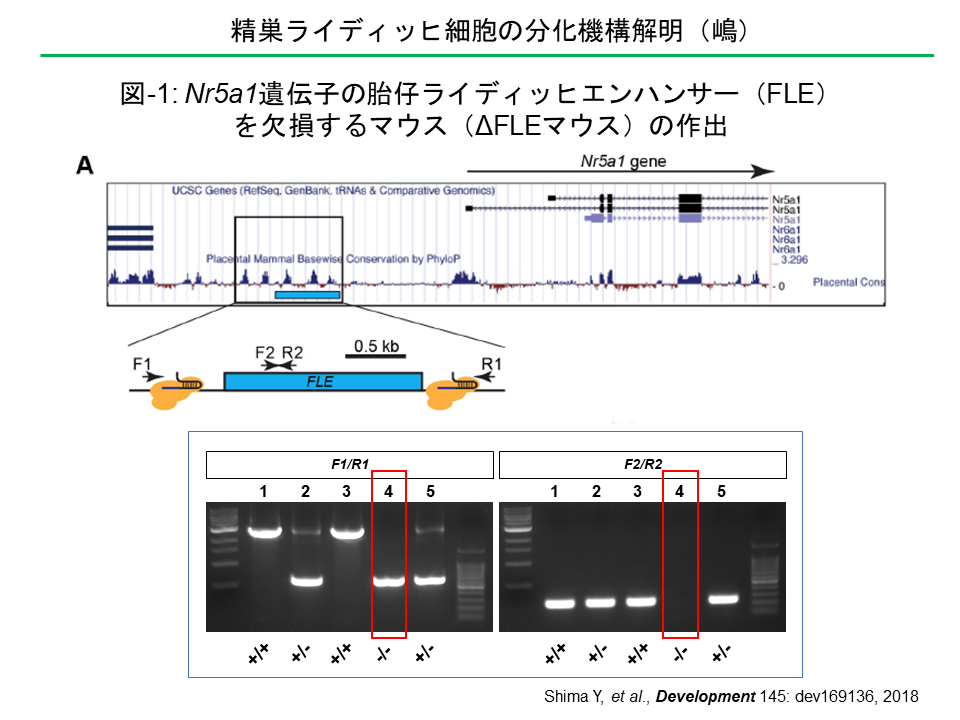
The Nr5a1 (Ad4BP/SF-1) gene encodes a transcription factor essential for development of the adrenal glands, gonads, and pituitary gland. Its expression is controlled by tissue-specific enhancers. In fetal Leydig cells, Nr5a1 expression is regulated by the fetal Leydig enhancer (FLE). To examine its function in vivo, we generated FLE-deficient mice using genome editing.
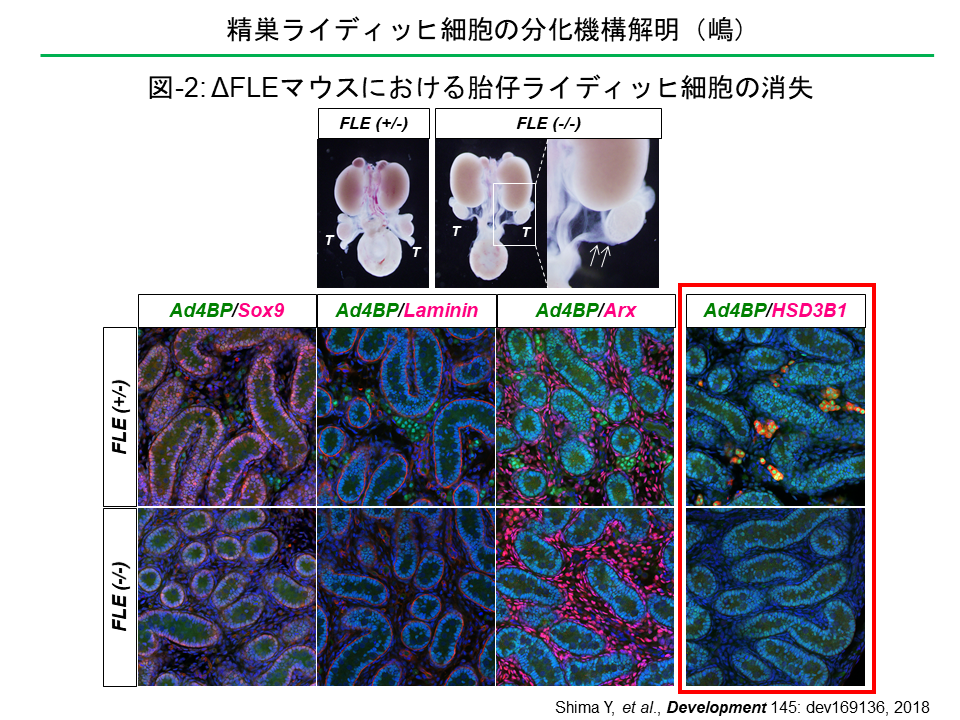
FLE-deficient male fetuses exhibited undescended testes and hypoplastic vas deferens. Sertoli cells, basement membranes, and undifferentiated interstitial cells were largely unaffected, whereas HSD3B1-positive fetal Leydig cells were completely absent. Consequently, fetal testicular androgen production was lost and masculinization was impaired.
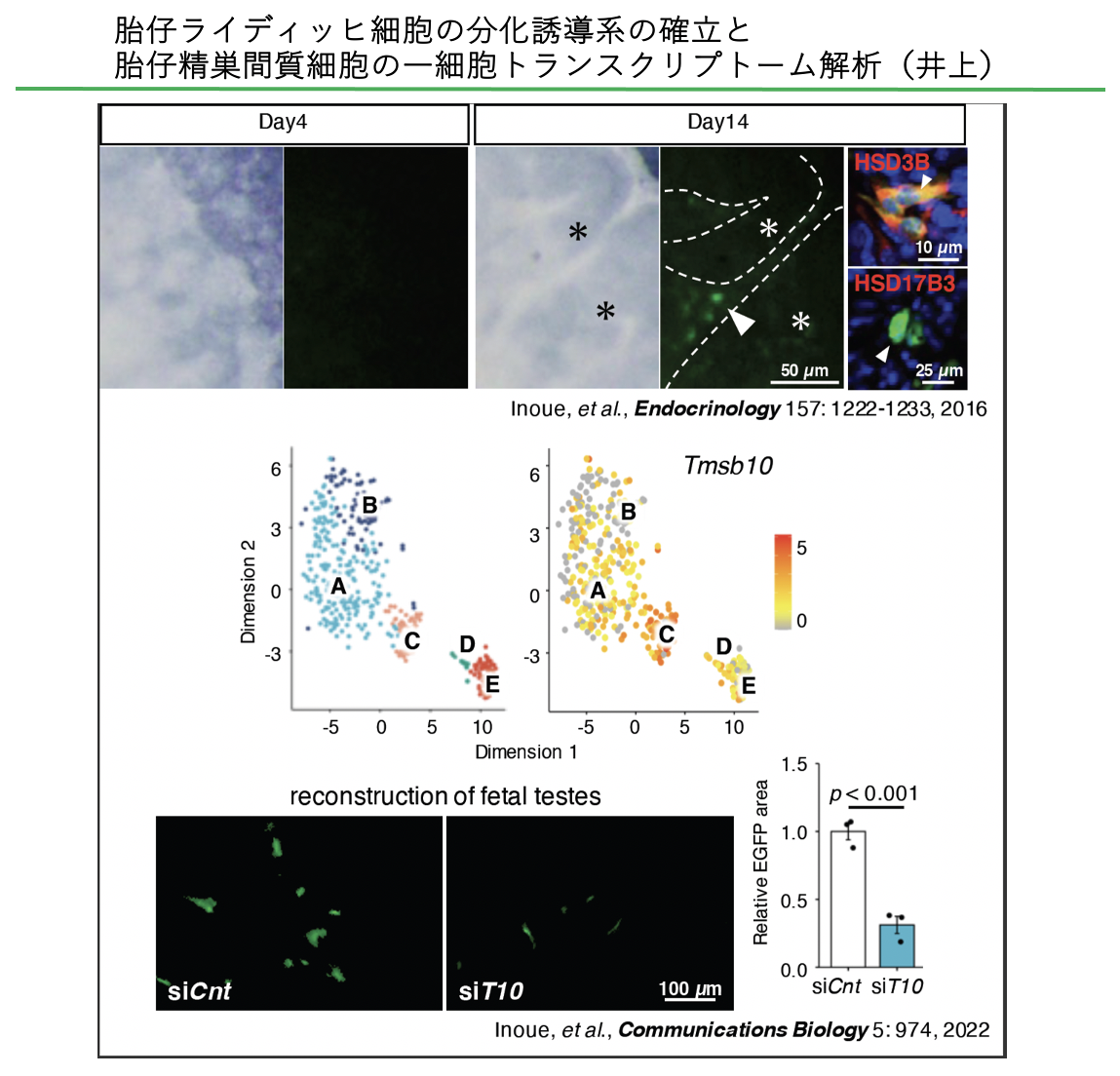
Fetal Leydig cells are thought to increase through differentiation from interstitial progenitors rather than cell division, but their progenitor population had not been identified. Using mice that express EGFP in fetal Leydig cells, we isolated both fetal Leydig cells and weakly EGFP-positive interstitial cells. A reconstituted culture system showed that the weakly positive population contains fetal Leydig progenitors. Single-cell transcriptomic analysis further identified high Tmsb10 expression in a putative progenitor population. Suppression of Tmsb10 inhibited Hedgehog signaling and fetal Leydig cell differentiation, indicating that transient Tmsb10 expression helps trigger this differentiation process.
